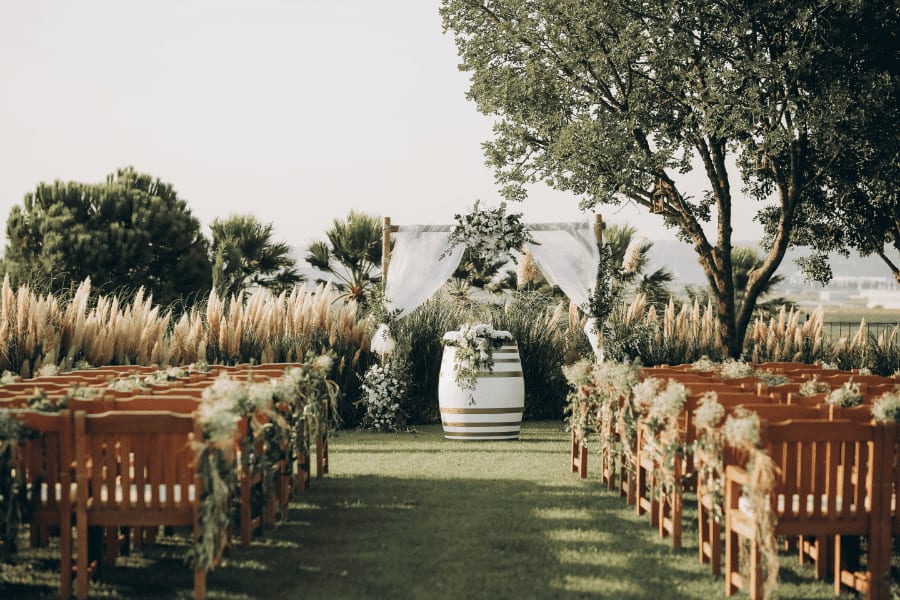
A humanist or celebrant-led ceremony is a symbolic celebration of love that takes place outside a religious setting. The couple commit to each other through readings, symbols and personal vows.
Watch out: in England and Wales, a humanist or celebrant-led ceremony is not legally binding on its own. You will need a short legal ceremony at a register office as well (in Scotland and Northern Ireland, humanist weddings are legally recognised). Book it in advance 😉.
Why choose a celebrant-led ceremony?
More and more couples choose this kind of ceremony for the freedom and authenticity it offers.
Unlike a register office ceremony, which can feel quick and formal and is often held in a small room, a celebrant-led ceremony can take place almost anywhere and be shaped entirely around you.
It reflects what makes each couple unique and turns the moment into something unforgettable.
It also makes it easy to blend cultures and suits every couple, including those who want to renew their vows.
How long does a celebrant-led ceremony last?
The ceremony should feel lively: a careful mix of emotion, tenderness and togetherness. Timing matters.
As a rule of thumb, a successful ceremony lasts 30 to 45 minutes.
1. The key planning steps
Choosing the venue
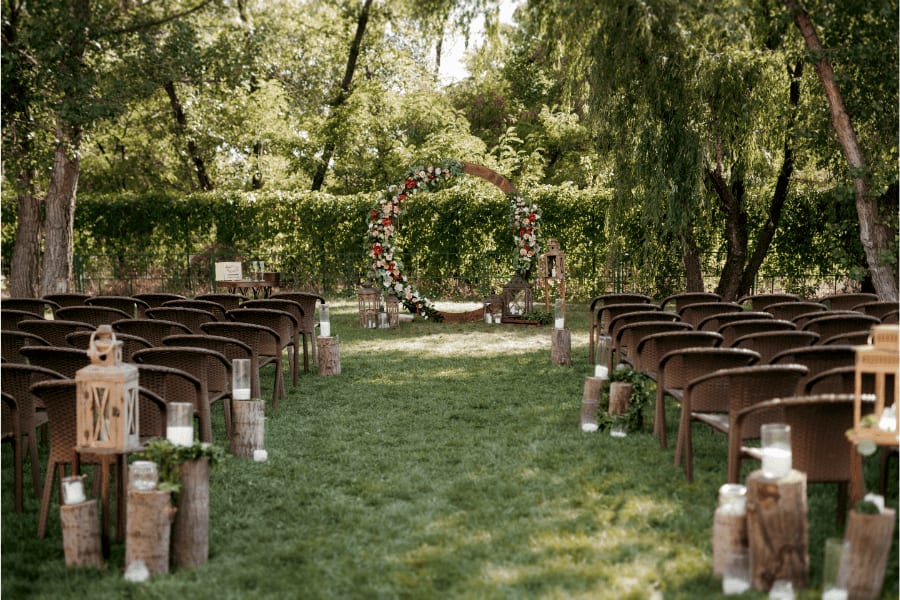
In most cases, the ceremony takes place at the reception venue, which is easier for guests: no driving between locations.
Your aim is to find a venue that can also host your ceremony. Outdoor space, such as a garden or a field, gives you even more freedom.
Fancy something unusual? Go for it, but check beforehand that your idea is feasible.
Choosing your celebrant
What does a celebrant do?
The celebrant leads your ceremony, tells your story and handles the welcome and transitions between speakers.
They are the conductor, and one of the keys to a successful celebration!
Who can lead your ceremony?
There are no rules, it is up to you:
- A friend or family member: ideally someone comfortable speaking in public and well organised, as the role is far from easy. And of course, they have to want to do it! Don't put this burden on your shyest friend, who will spend months dreading it.
- A professional celebrant: hire an independent or humanist celebrant, or a wedding planner who officiates, and benefit from their experience.
2. The heart of the ceremony: personality and emotion
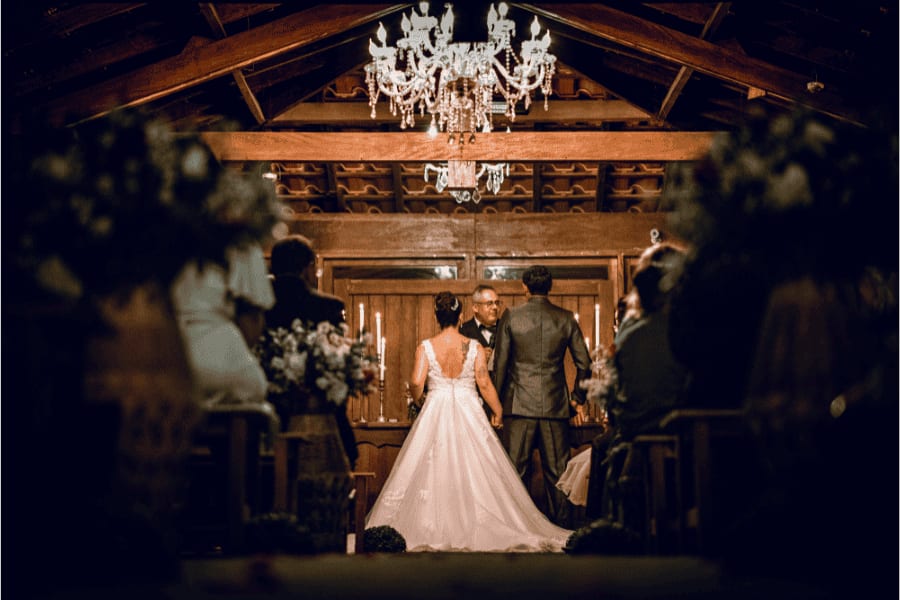
Building the structure of your ceremony
This often feels like the most daunting part, but it is essential.
Don't panic! If you are writing the texts yourselves and lack inspiration, simply follow a chronological order:
- An introduction, to welcome your guests and explain why you are gathered.
- Then your love story: how you met, your life before the wedding, the proposal, and how you see the future.
- Finally, thank your guests and invite them to carry on celebrating.
Not so complicated after all! Now slot in the different elements: readings, rituals, music.
The running order
To keep an eye on timing, here are the key moments:
Welcoming the guests
The celebrant seats the guests and gives any instructions before the start.
The entrance
Classic, led by bridesmaids and groomsmen, or something more inventive: enjoy it!
The introduction
The celebrant introduces themselves, outlines the ceremony and tells your story.
Readings and surprises from guests
Family, friends or the best man and maid of honour pay tribute to your love. The celebrant keeps an eye on the clock. To keep things moving, aim for no more than 6 contributions.
Exchanging vows
This is it! The exchange of vows is the emotional high point that everyone is waiting for.
Closing the ceremony
All good things come to an end: the celebrant closes the ceremony and kicks off the celebrations!
3. What makes a ceremony unique

Symbolic rituals
Rituals are symbolic acts performed by the two of you or with your guests, for example:
- The wine box ceremony: seal a good bottle of wine and love letters to each other in a wooden box, to open together years later.
- The tree planting ritual: one of the most popular, full of symbolism. The roots stand for the foundations of your marriage, the growing branches for your future together.
- Handfasting: facing each other, you join hands while chosen guests tie your hands and wrists with ribbons, a symbol of the bond between you. Handfasting has deep roots in Celtic tradition.
For more inspiration, see our 10 wedding ceremony ritual ideas.
The importance of music and readings
Music is central to the ceremony and carries the emotions you want to share. You only realise how much it matters when the sound fails.
To avoid mishaps on the day:
- Pick songs for the key moments: guests arriving, your entrance, your exit.
- Mind the transitions: nothing is worse than music cutting out mid-emotion! Brief your celebrant and DJ or band.
- Think about logistics: keep equipment out of sight where possible and spread the sound evenly (allow around 4 speakers for 150 guests).
Decorating your ceremony
Celebrant-led ceremonies are about authenticity and simplicity, so decorating can be easy and affordable:
- Use natural materials such as seasonal flowers and wood: a floral arch as a backdrop, or a wooden welcome sign.
- Add soft lighting with fairy lights, lanterns or candles.
- Choose white or wooden chairs for a warm atmosphere.
- Leave order of service cards on the chairs, hand out fans in hot weather or set up a lemonade bar.
Just one rule: be creative!
How much does a celebrant-led ceremony cost?
As with the wedding itself, the cost depends on several factors:
- the venue
- the number of guests
- the decoration
- the suppliers you book, such as a photographer, musicians or a professional celebrant
Much of the cost is absorbed into the overall wedding budget, since the venue and photographer are often the same.
Here is an overview of the other costs to plan for:
| Ceremony item | From | Up to |
| Celebrant | £500 | £1,000 |
| Decoration / flowers | £600 | £2,500 |
| Furniture and props (gazebo, chairs, etc.) | £200 | £900 |
| Sound system | £250 | £700 |
| Musicians or choir for the ceremony only | £350 | £1,300 |
| Register office ceremony (England and Wales) | £70 | £150 |
| Total | £1,970 | £6,550 |
These costs can be cut considerably with creative solutions, such as making some of the decorations yourselves 😉.
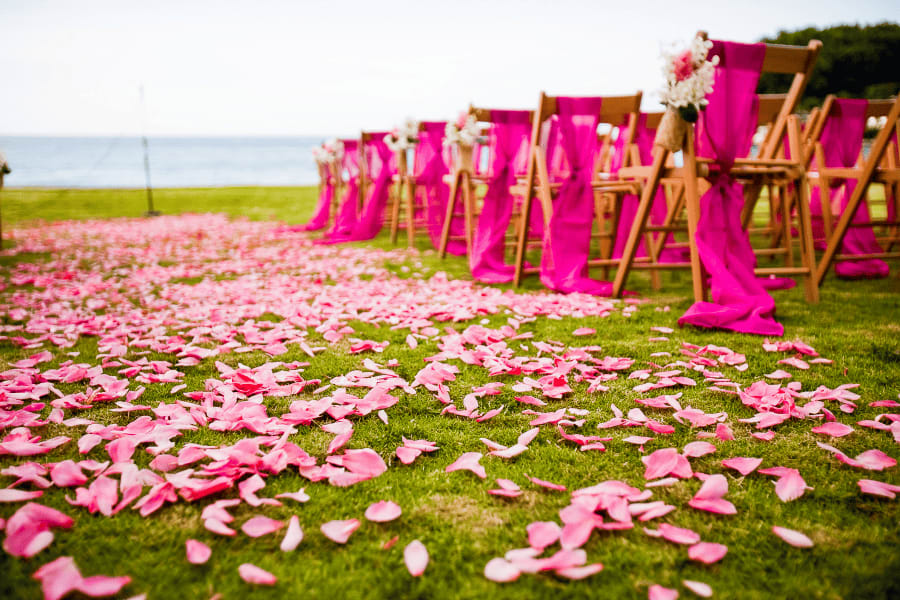
A celebration with endless possibilities
Intimate and fully personalised, a celebrant-led ceremony is a wonderful way to celebrate your union exactly as you wish.
Like any big event, though, it needs careful preparation.
If you would like help planning your ceremony, or want to hand over the logistics on the day, call on a wedding planner. Their experience will help make this day your big day!
To find a wedding planner near you, browse our directory.