Depending on the era and the culture, wedding traditions differ from one country to the next.
The idea is always the same, celebrating the union of two people, yet the rituals are varied and sometimes rather surprising.
Love discovering other cultures? Then join us on a world tour of the following wedding traditions!
England: something old, something new
Let's start at home! For a happy marriage, English tradition says the bride should carry five very specific things: "Something old, something new, something borrowed, something blue, and a sixpence in her shoe".
- Something new: for a bright future;
- Something blue: for faithfulness and love;
- Something old: for the link with the family and its history;
- Something borrowed from a happily married woman: to pass on good luck;
- A sixpence in her shoe: for prosperity in the couple's new home.
The rhyme dates back to Victorian times and is still followed by countless British brides today, often with a family heirloom as the "something old".
Germany: the Polterabend
On the eve of the wedding, German friends and family gather for the Polterabend. Guests bring old porcelain, crockery or tiles and smash them in front of the couple, following the saying "Scherben bringen Glück" (shards bring luck). Glass and mirrors are off-limits, as they are thought to bring bad luck.
The couple must then sweep up the pieces together, a symbol that they will face difficulties as a team.
Tunisia: the henna ceremony
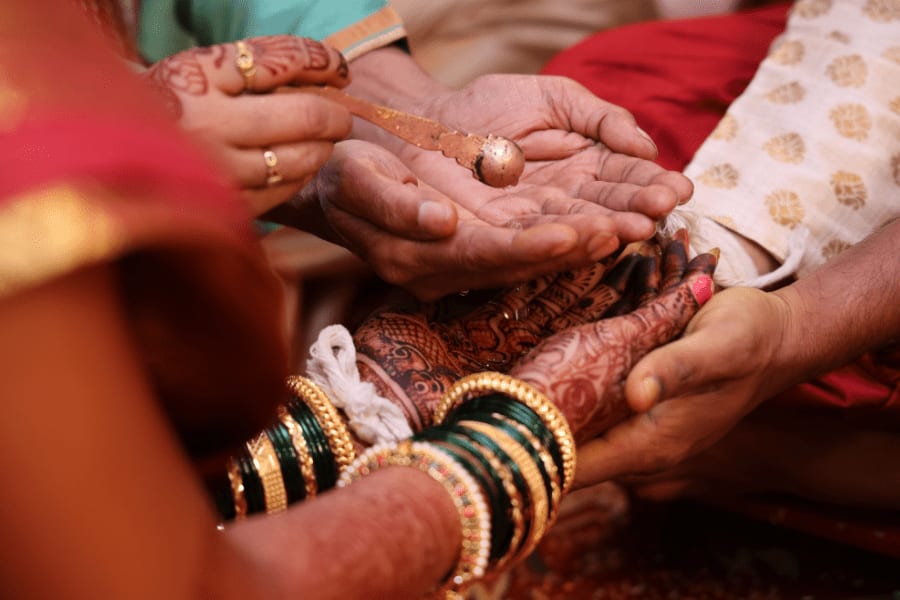
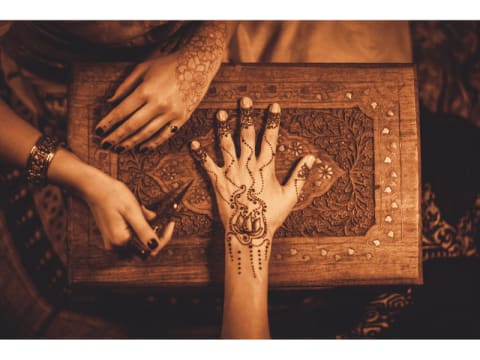
In Tunisia, the days before the wedding are devoted to the couple. The henna ceremony traditionally takes place on the fourth day.
A woman from the family applies a paste made of henna, rose water and water to the bride's hands and feet, drawing intricate patterns of butterflies and flowers.
On the fifth day, the ritual is repeated with a second layer and new designs. In Tunisian tradition, henna is believed to bring the bride good luck. Henna nights are also a much-loved part of many South Asian weddings in the UK, where the Mehndi is a celebration in its own right.
Morocco: the seven wedding dresses
At a traditional Moroccan wedding, there is no need to choose between two, three or even seven outfits.
The bride can wear up to seven different dresses during the celebration, helped by several attendants who change her dress and jewellery.
The seven outfits recall the seven days over which a Moroccan wedding was once celebrated. Traditional garments include the R'Batia, the Fassia and the Sahraouia.
Japan: the sake ceremony
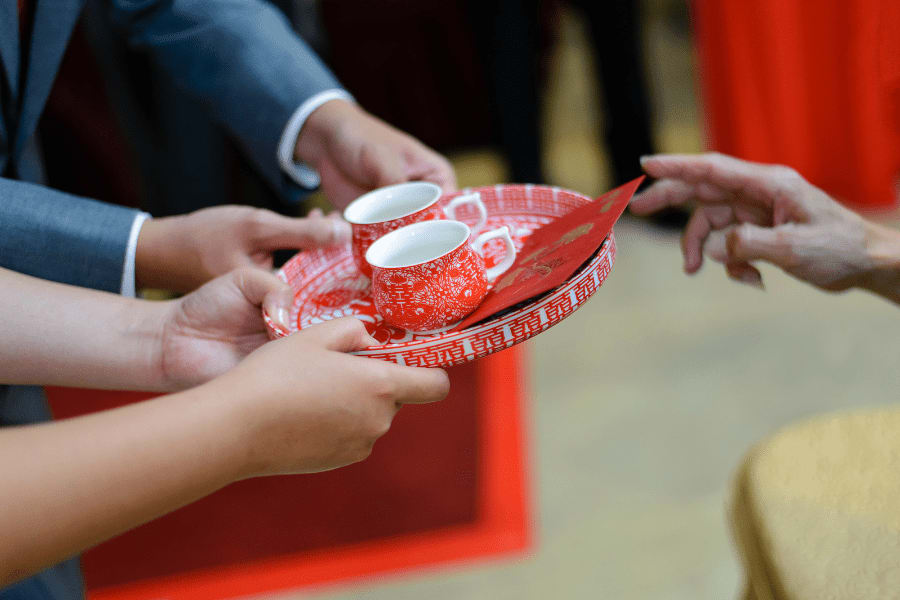
San-san-kudo, literally "three, three, nine times", is the sake ceremony of the traditional Japanese wedding.
The couple, and often their parents, take three sips of sake from each of three cups. The cups are often said to represent the past, present and future, and the ceremony seals the union of the two families.
Three times three makes nine, a number considered lucky in Japan.
China: the crying bride chorus
Alongside the famous tea ceremony, weddings among the Tujia people feature a remarkable custom: "crying before the wedding".
The bride starts crying a month before the big day, out of sadness at leaving her family home and gratitude towards her parents.
Aunts, sisters, her mother and other women of the family join in, hence the name "crying chorus".
Russia: the bride kidnapping
One of the most popular wedding traditions in Russia!
During the celebration, the bride is "kidnapped" in jest and a ransom is demanded from the groom. Don't worry, it's all to entertain the guests.
The "kidnappers" come up with a series of challenges the groom must complete to win his wife back.
If he fails, he has to pay off the bridesmaids with flowers, chocolates or a little money.
Czech Republic: who has the last word?
In some regions of the Czech Republic, the groom is jokingly given a horse collar to wear and a ball and chain tied to his leg.
The bride is handed a whip, a tongue-in-cheek way of showing who has the last word at home. The custom takes place after the ceremony.
Nigeria and Benin: tasting the four elements
As the saying goes, marriage is not always plain sailing. There are ups and downs that the couple must face together.
To symbolise this, the Yoruba people, who live mainly in Nigeria and Benin, practise the ritual of "tasting the four elements".
The couple taste four different flavours, each standing for a situation in married life:
- A slice of lemon: sour, for the disappointments that may come;
- A sip of vinegar: for hard times and shared struggles;
- Cayenne pepper: to keep some spice in the relationship;
- Honey: for the sweetness and happiness of marriage.
France: throwing rice
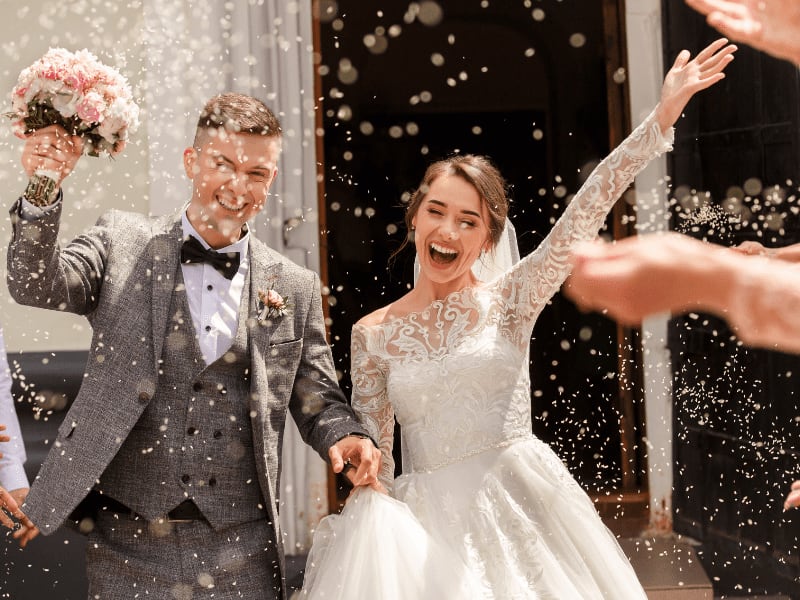
This tradition goes back to antiquity. Throwing rice as the couple leave the church or town hall is meant to bring them prosperity and fertility and to ward off bad luck.
It is still popular today and is often given an eco-friendly twist with petals, dried lavender or biodegradable confetti, the British favourite. Many UK venues only allow natural confetti, so it's worth checking beforehand.
Whatever the form, this joyful moment brings guests and couple together and marks the start of the celebration and of married life.
Conclusion
Weddings around the world each have their own rich and varied customs. Whether in Britain, India, Africa or elsewhere, every country celebrates marriage in its own way.
Wedding rituals say a great deal about a country's culture and history, and offer a fascinating glimpse of the values that bind a community together.
Read more: many of these traditions fit beautifully into a humanist or symbolic ceremony. For more ideas, see our 10 wedding ceremony rituals.